
CRUE President stresses that “having a university education is an excellent investment” at the presentation of the report La Universidad Española en Cifras
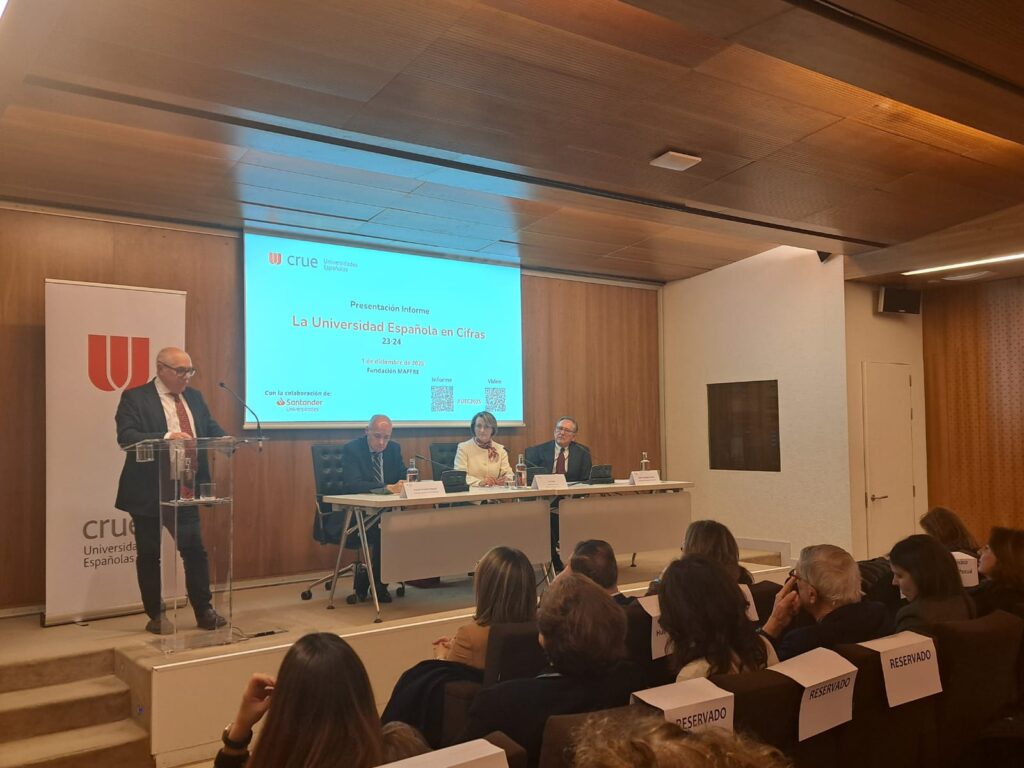
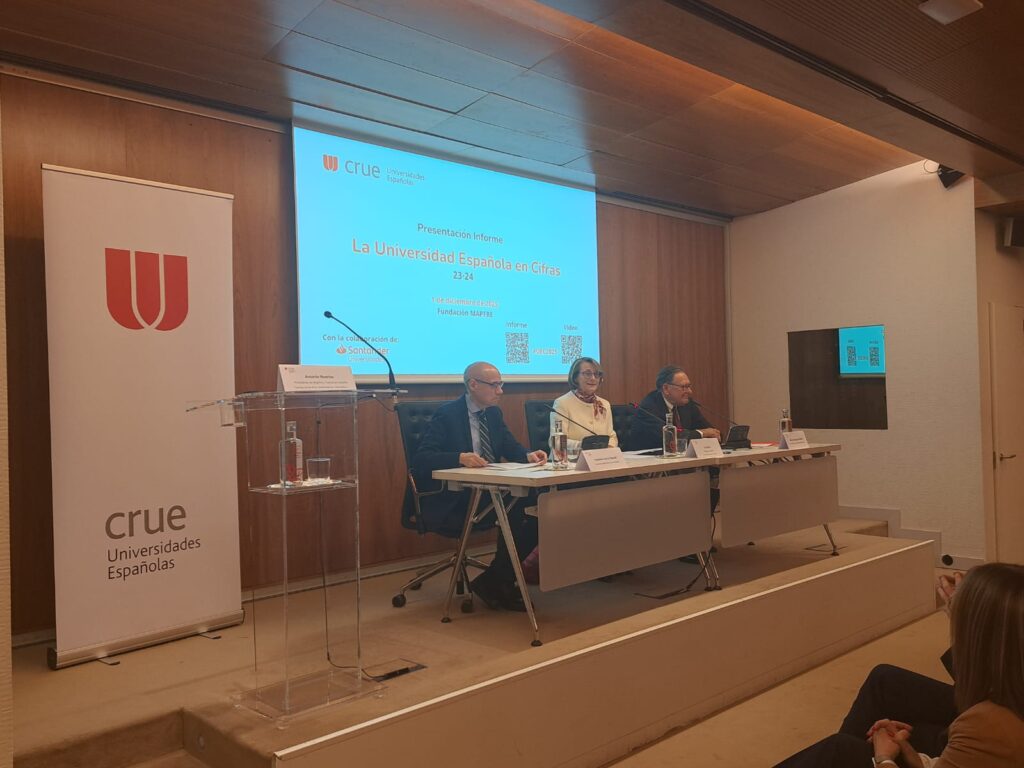
Madrid, 3 December 2025. The Conference of Rectors of Spanish Universities (CRUE) has presented the fifteenth edition of the report La Universidad Española en Cifras (The Spanish University System in Figures), corresponding to 2023 and the 2023–2024 academic year, at Fundación Mapfre in Madrid. This publication provides a comprehensive overview of the Spanish University System (SUE), placing it in the context of EU and OECD countries and analysing its performance, strengths and main structural challenges.
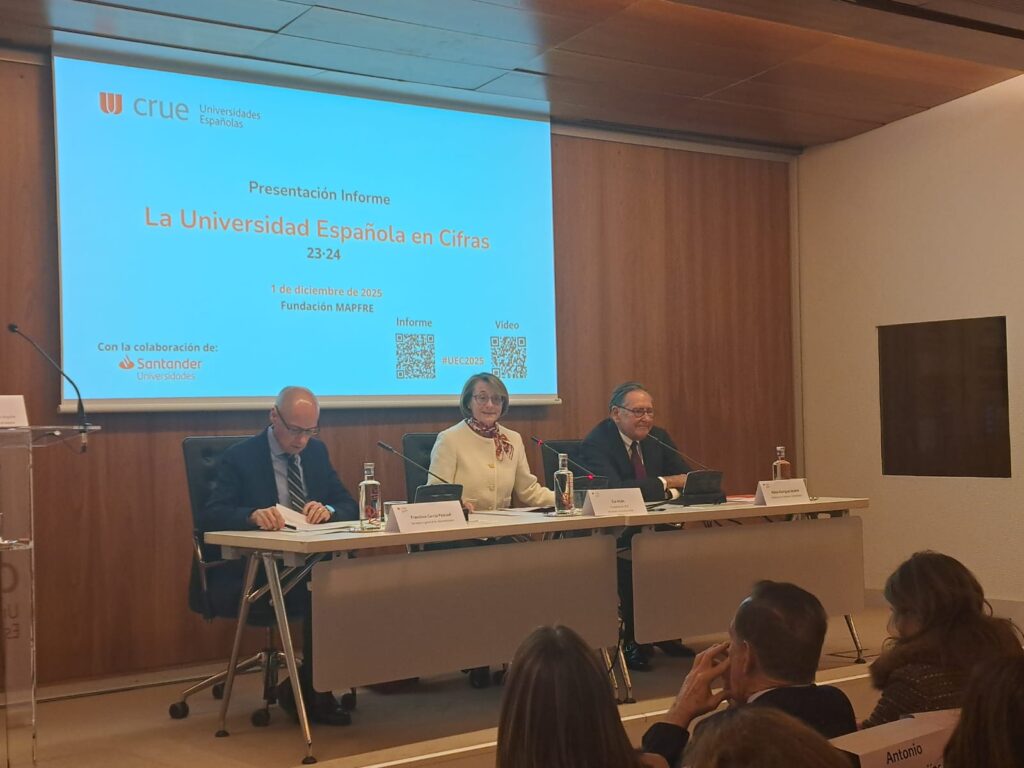
The event, held on Monday 1 December, was chaired by the President of CRUE and Rector of Universitat Jaume I, Eva Alcón Soler, and attended by the Secretary General for Universities, Francisco García Pascual, and the President of Santander Universities and Vice-President of Universia, Matías Rodríguez Inciarte. During the event, Juan Julià, Adjunct Adviser to the Presidency of CRUE and Full Professor, presented the key findings of the report.
In her address, the President of CRUE recalled that the report constitutes “an in-depth snapshot of the Spanish University System” and stressed that CRUE “conceives this report as an exercise in transparency and accountability to society”. She thanked the directors of the study, Juan Hernández Armenteros (University of Jaén) and José Antonio Pérez García (Universitat Politècnica de València), as well as the data teams of all universities, underlining that the report “allows us to rigorously assess what we do and how we do it”.
Alcón also highlighted three major conclusions of the report: employability, scientific performance and the state of university funding.
Regarding employability, the President noted that, according to the data presented, “Spanish university graduates reduce their unemployment rate more than the OECD and EU-23 averages”, adding that “having a university education is an excellent investment”. Among adults aged 25–64 with a Bachelor’s degree, the reduction in the unemployment rate reaches 7.3 percentage points, compared to 3.6 in the OECD and 3.7 in the EU-23. Among young people aged 25–34, the reduction is 5.7 percentage points, compared to 2.0 in the OECD and 2.4 in the EU-23. However, she warned that “there is still room for improvement”, as 17.5% of people with tertiary education work on part-time contracts throughout the year (21.0% among women), compared to 8.3% in the OECD, reflecting the persistent “precariousness” of the Spanish labour market.
The second conclusion highlighted by Alcón concerned the scientific performance of the university system. “The normalised index of scientific quality of our University System stands at a level very close to benchmark values in the United States, Germany and France,” she stated. She also recalled that these results are achieved “in a context in which, despite having reached the highest level of R&D expenditure in the historical series, we remain 34% below the EU-27 and OECD averages”.
The third major area addressed was funding. Alcón pointed out that, over the past decade, “public funding for the Spanish University System has been 21% below OECD averages and 26% below EU-23 averages”, a gap she described as “enormous and structural”. She also referred to the insufficient supply of public student accommodation, which “is conditioning genuine equality of opportunity”, as it forces many families to rely on a highly pressured private rental market with high prices.
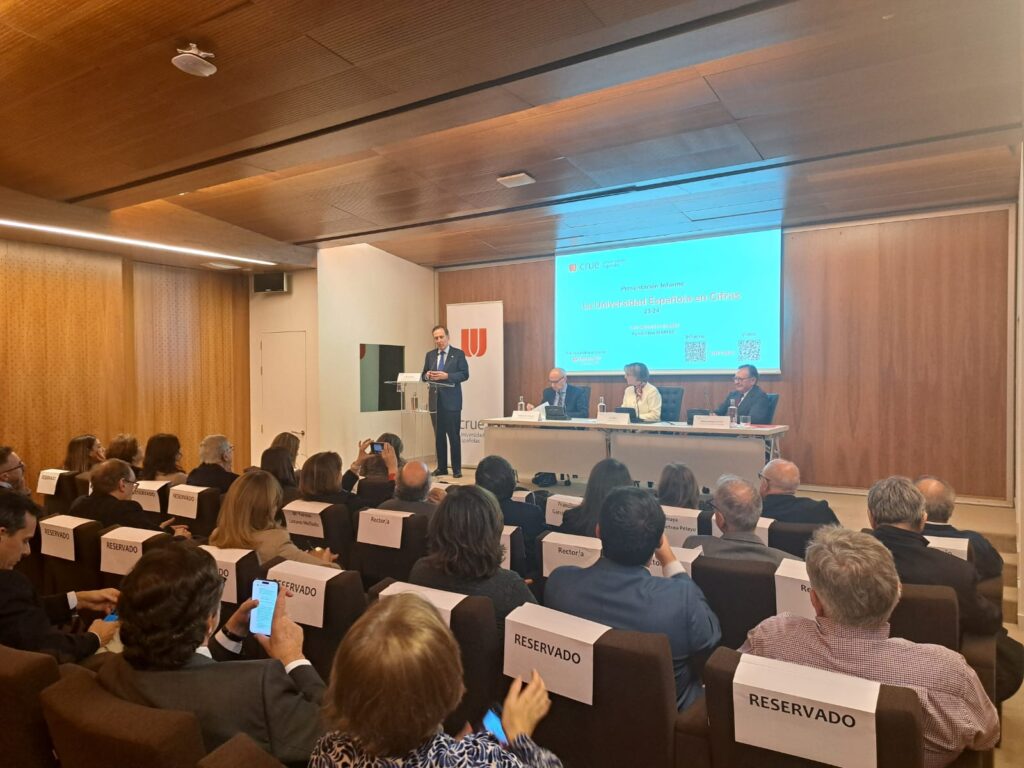
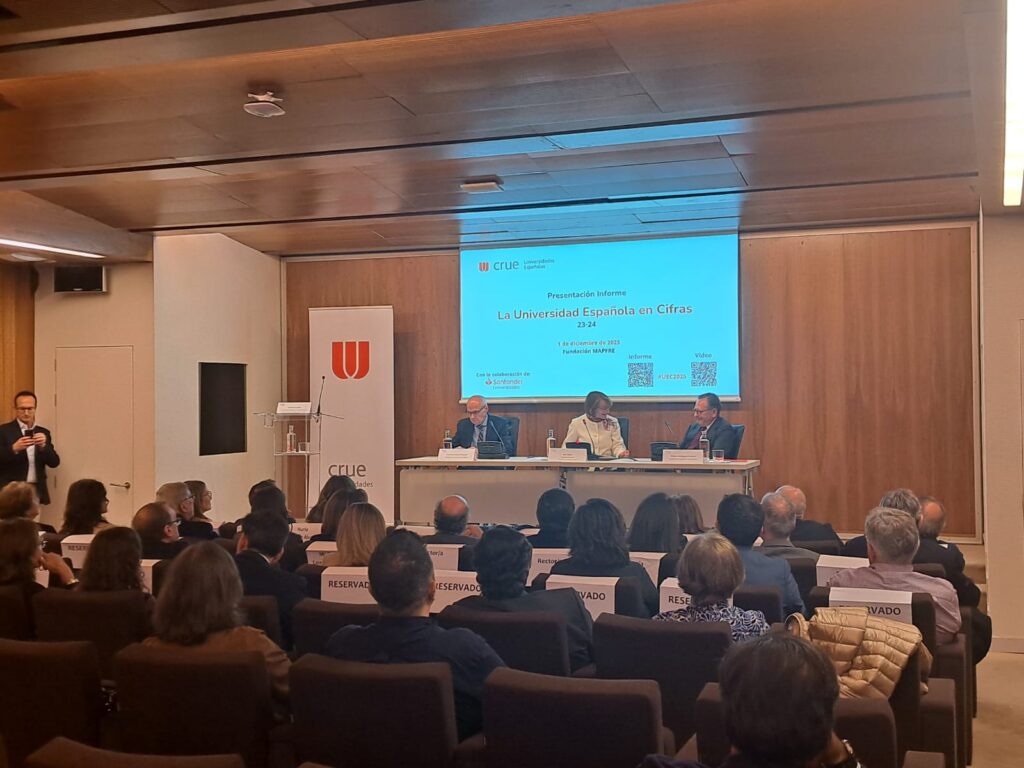
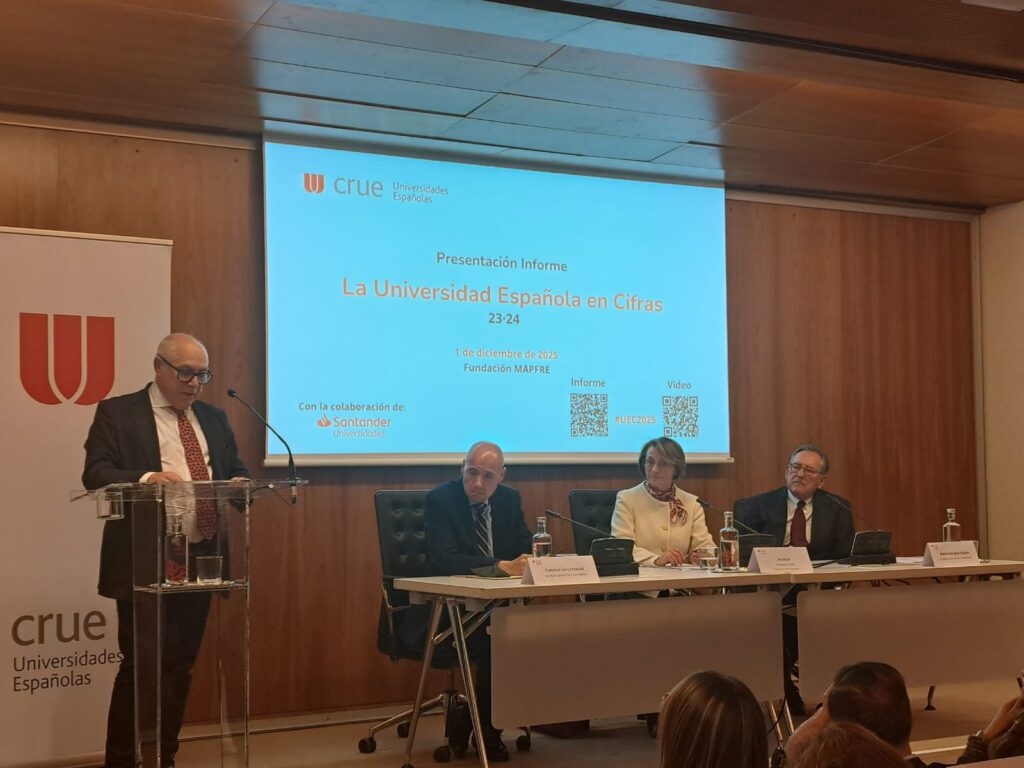
Finally, Alcón underlined the strategic value of universities: “The Spanish University System achieves results on a par with the best European countries,” she stated, “despite carrying out our activity in a context of underfunding of public universities in Spain”. She recalled that investing in universities means investing in “the professional and personal development opportunities of our young people”, in “social mobility”, in “the competitiveness of the productive fabric and in the country’s progress”. She concluded by noting that “this handicap has not reduced, and will not reduce, the commitment to accountability of the Spanish University System, of which this report is a clear example”.
