
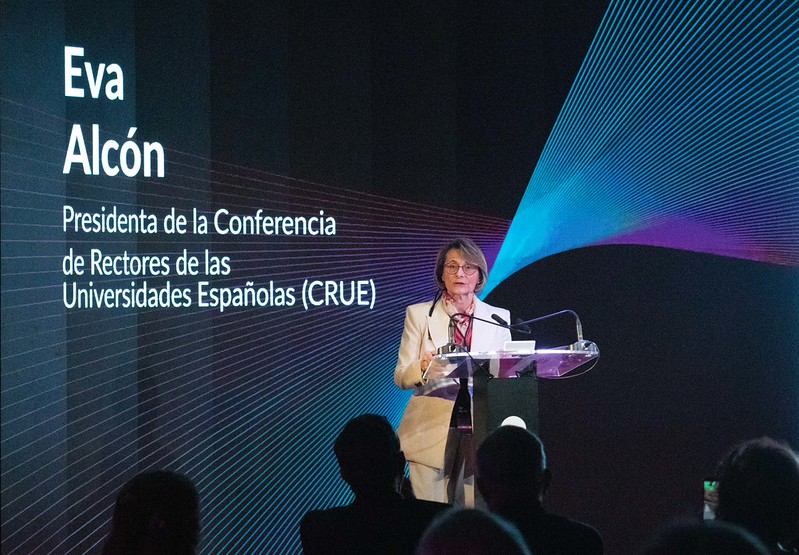
Madrid, 5 November 2025. The President of the Conference of Rectors of Spanish Universities (CRUE) and Rector of Universitat Jaume I, Eva Alcón, was one of the prominent figures participating in the Ibero-American Future Congress, held at Casa de América in Madrid on 30 and 31 October. Under the title “The Challenges of Higher Education in the Ibero-American Knowledge Area”, she took part on 31 October as a keynote speaker in a panel devoted to higher education.
During her address, Alcón underlined the transformative potential of universities and the need to strengthen their role as key social actors. “We must highlight the social impact of our research by connecting universities, business and society,” she stated.
She also emphasised the importance of “promoting a global culture of openness, tolerance and dialogue”, grounded in equal opportunities, diversity and inclusion, and advocated for the development of strong alliances between universities, companies and public administrations in order to address major global challenges.
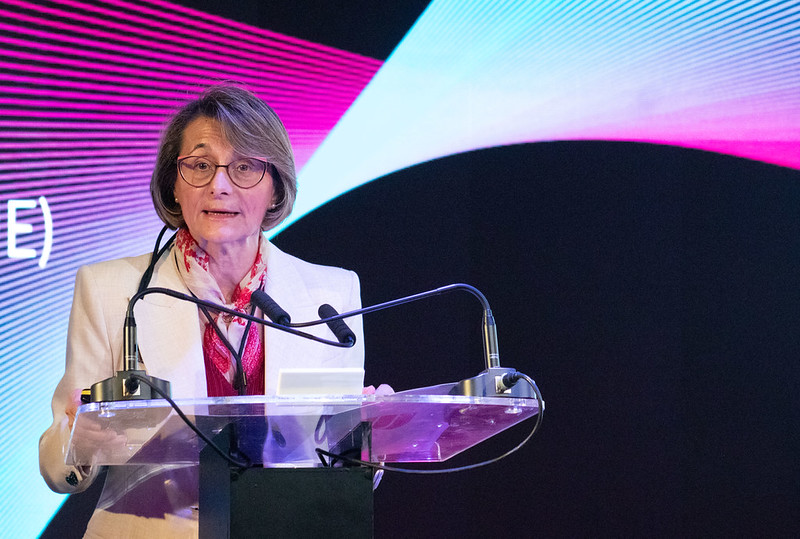
Among the main future challenges for higher education in the Ibero-American Knowledge Area, Alcón referred, among other issues, to the mutual recognition of degrees, the creation of an Ibero-American Erasmus programme, digital transformation, and the ethical and sustainable integration of artificial intelligence into university teaching.
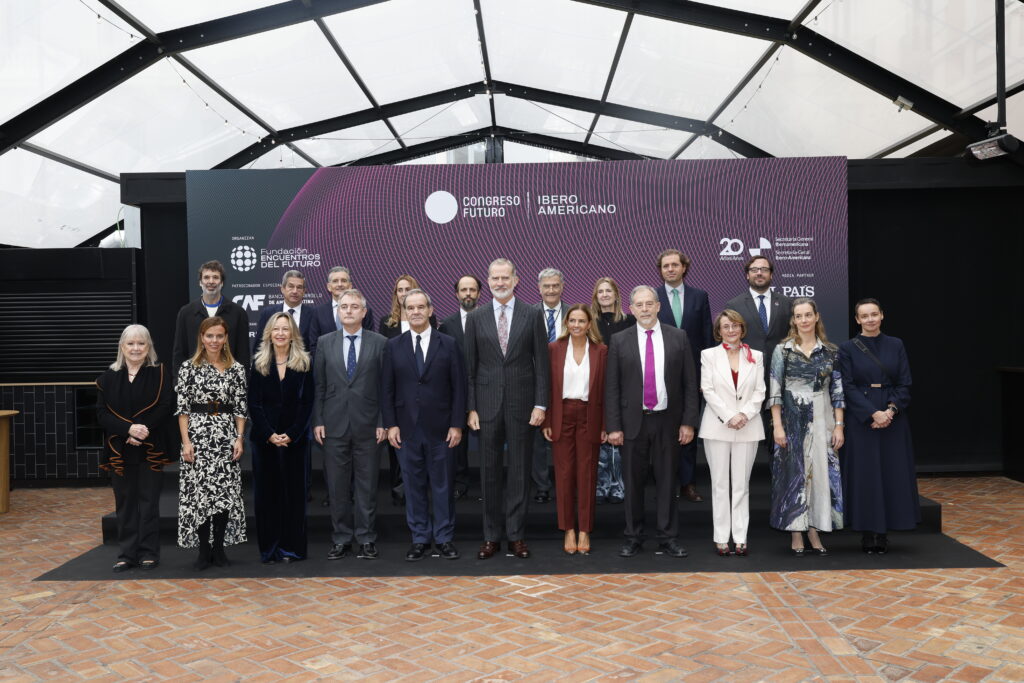
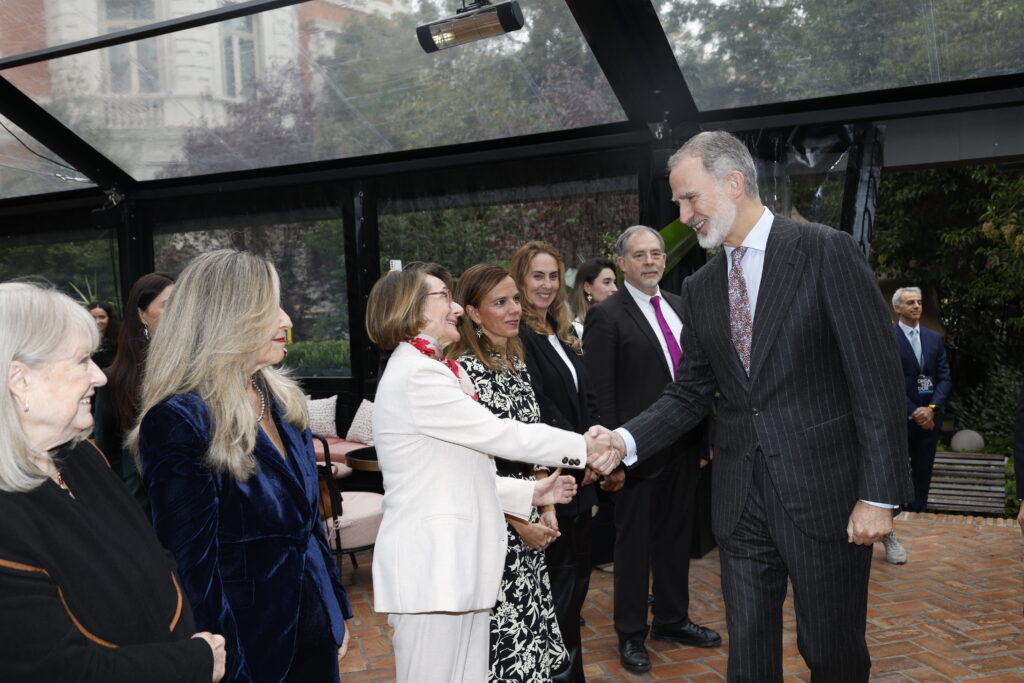
His Majesty King Felipe VI closed the morning session of the Ibero-American Future Congress on 31 October, highlighting the strength, diversity and potential of the region to drive joint solutions to major global challenges.
A Science Outreach and Knowledge-Sharing Event on Latin America
The Ibero-American Future Congress is a science outreach and knowledge-sharing event focused on Latin America, organised by the Ibero-American General Secretariat (SEGIB) and the Encuentros del Futuro Foundation (FEF). This year marked its first edition to be held in Europe.
The event brought together leading figures from science, politics, higher education, culture and innovation, with the aim of democratising knowledge on global challenges such as artificial intelligence, the climate emergency, the crisis of democracies, sustainability and education.
